
- posted: Mar. 06, 2026
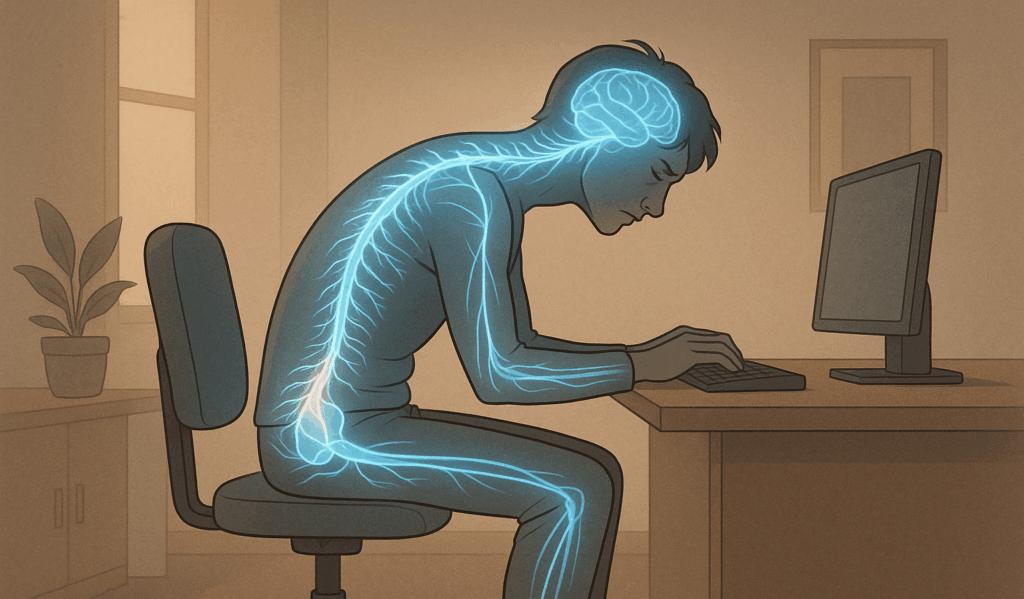
Sports injuries come in many forms. Twisted ankles during a basketball jump, pulled hamstrings from a morning run, tennis elbow from a racquet sport, tearing muscles or tendons during gymnastics…the list goes on and on. However, the one that people may not even consider an injury is prolonged sitting. This is difficult to avoid, especially for those with an office job, a driving job, a customer service job, or even a remote job for many people. In simple terms, prolonged sitting is a type of repetitive strain injury. The slouched, stiff posture of sitting in a desk all day is comparable to the abnormal load placed on the musculoskeletal system by repetitive motions in sports. (i.e. racket swings, baseball pitches, swimming strokes, running steps, etc.) These micro-traumas may lead to symptoms like chronic stiffness, inflammation, pain, or discomfort as time goes on.
What Actually Happens in Your Body and Why
With repeated exposure to long periods of sitting, your body alters itself to fit the shape of your chair. Your bones, muscles, tendons, and ligaments become so used to these long-term surroundings, that they feel the need to adapt and transform to accommodate the sitting position so often. So, which areas are being specifically affected by this?
Hip flexors: The hip flexors persist in a tight, shortened position that is not a natural or comfortable stance for them.
Gluteus maximus: As a result of the shortened hip flexors, the glutes will “fall asleep”, and in turn, become weaker and less supportive of the lower back and the pelvis.
Shoulders: When you lean toward the computer screen or paperwork, the shoulders default into a forward-rounded posture. This causes the head to protrude forward over the desk and place a great deal of unsupported weight on the neck and upper back.
Spinal discs: The excessive weight on the cervical spine drastically increases the pressure on your spinal discs. As a result, the natural state of your biomechanics is damaged. This disruption appears as low back pain, sciatica, minimized range of motion, tension headaches, and more.
Tips for Seated Injury Prevention
Even though people with seated jobs are prone to the symptoms and conditions previously discussed, there are certainly ways to avoid injury and alleviate existing discomfort related to long periods of time at a desk. One easy and simple way to break the cycle of static posture is to get up whenever you can, and allow movement into your daily schedule. With as little as 2 minutes every half-hour of stretching (especially chest and hip flexor stretches), walking, standing, etc.; this could make all the difference in keeping your joints lubricated and keeping your blood flow at a healthy pace. Another change you can make is optimizing your work station. Your feet should rest flat on the floor comfortably, your screen should be at eye level, and your lower back should be supported by a firm pillow or a rolled up jacket.
McNulty Chiropractic Can Bring You Back to Peak Performance
Mindful modifications to integrate movement into your daily work schedule are a great step towards physical health. However, your body might be in need of some professional care to undo prolonged strain caused by consistent sitting. We have 2 very knowledgeable chiropractors, Dr. Tom and Dr. Rob, who will be happy to adjust your spine and help restore your body’s ideal posture. We also have integrative therapies (such as class IV laser, shockwave therapy, Active Release Techniques, spinal decompression) available for the correction of sitting injuries. Through these treatment options in conjunction with one another, we can help release compressed nerves, revitalize dormant muscles, and get you back on track to a full range of motion. Contact us today at (847)-831-5252 or [email protected] to schedule an exam so we can make your personalized treatment plan!
- posted: Mar. 06, 2026
Sports injuries come in many forms. Twisted ankles during a basketball jump, pulled hamstrings from a morning run, tennis elbow from a racquet sport, tearing muscles or tendons during gymnastics…the list goes on and on. However, the one that people may not even consider an injury is prolonged sitting. This is difficult to avoid, especially for those with an office job, a driving job, a customer service job, or even a remote job for many people. In simple terms, prolonged sitting is a type of repetitive strain injury. The slouched, stiff posture of sitting in a desk all day is comparable to the abnormal load placed on the musculoskeletal system by repetitive motions in sports. (i.e. racket swings, baseball pitches, swimming strokes, running steps, etc.) These micro-traumas may lead to symptoms like chronic stiffness, inflammation, pain, or discomfort as time goes on.
What Actually Happens in Your Body and Why
With repeated exposure to long periods of sitting, your body alters itself to fit the shape of your chair. Your bones, muscles, tendons, and ligaments become so used to these long-term surroundings, that they feel the need to adapt and transform to accommodate the sitting position so often. So, which areas are being specifically affected by this?
Hip flexors: The hip flexors persist in a tight, shortened position that is not a natural or comfortable stance for them.
Gluteus maximus: As a result of the shortened hip flexors, the glutes will “fall asleep”, and in turn, become weaker and less supportive of the lower back and the pelvis.
Shoulders: When you lean toward the computer screen or paperwork, the shoulders default into a forward-rounded posture. This causes the head to protrude forward over the desk and place a great deal of unsupported weight on the neck and upper back.
Spinal discs: The excessive weight on the cervical spine drastically increases the pressure on your spinal discs. As a result, the natural state of your biomechanics is damaged. This disruption appears as low back pain, sciatica, minimized range of motion, tension headaches, and more.
Tips for Seated Injury Prevention
Even though people with seated jobs are prone to the symptoms and conditions previously discussed, there are certainly ways to avoid injury and alleviate existing discomfort related to long periods of time at a desk. One easy and simple way to break the cycle of static posture is to get up whenever you can, and allow movement into your daily schedule. With as little as 2 minutes every half-hour of stretching (especially chest and hip flexor stretches), walking, standing, etc.; this could make all the difference in keeping your joints lubricated and keeping your blood flow at a healthy pace. Another change you can make is optimizing your work station. Your feet should rest flat on the floor comfortably, your screen should be at eye level, and your lower back should be supported by a firm pillow or a rolled up jacket.
McNulty Chiropractic Can Bring You Back to Peak Performance
Mindful modifications to integrate movement into your daily work schedule are a great step towards physical health. However, your body might be in need of some professional care to undo prolonged strain caused by consistent sitting. We have 2 very knowledgeable chiropractors, Dr. Tom and Dr. Rob, who will be happy to adjust your spine and help restore your body’s ideal posture. We also have integrative therapies (such as class IV laser, shockwave therapy, Active Release Techniques, spinal decompression) available for the correction of sitting injuries. Through these treatment options in conjunction with one another, we can help release compressed nerves, revitalize dormant muscles, and get you back on track to a full range of motion. Contact us today at (847)-831-5252 or [email protected] to schedule an exam so we can make your personalized treatment plan!